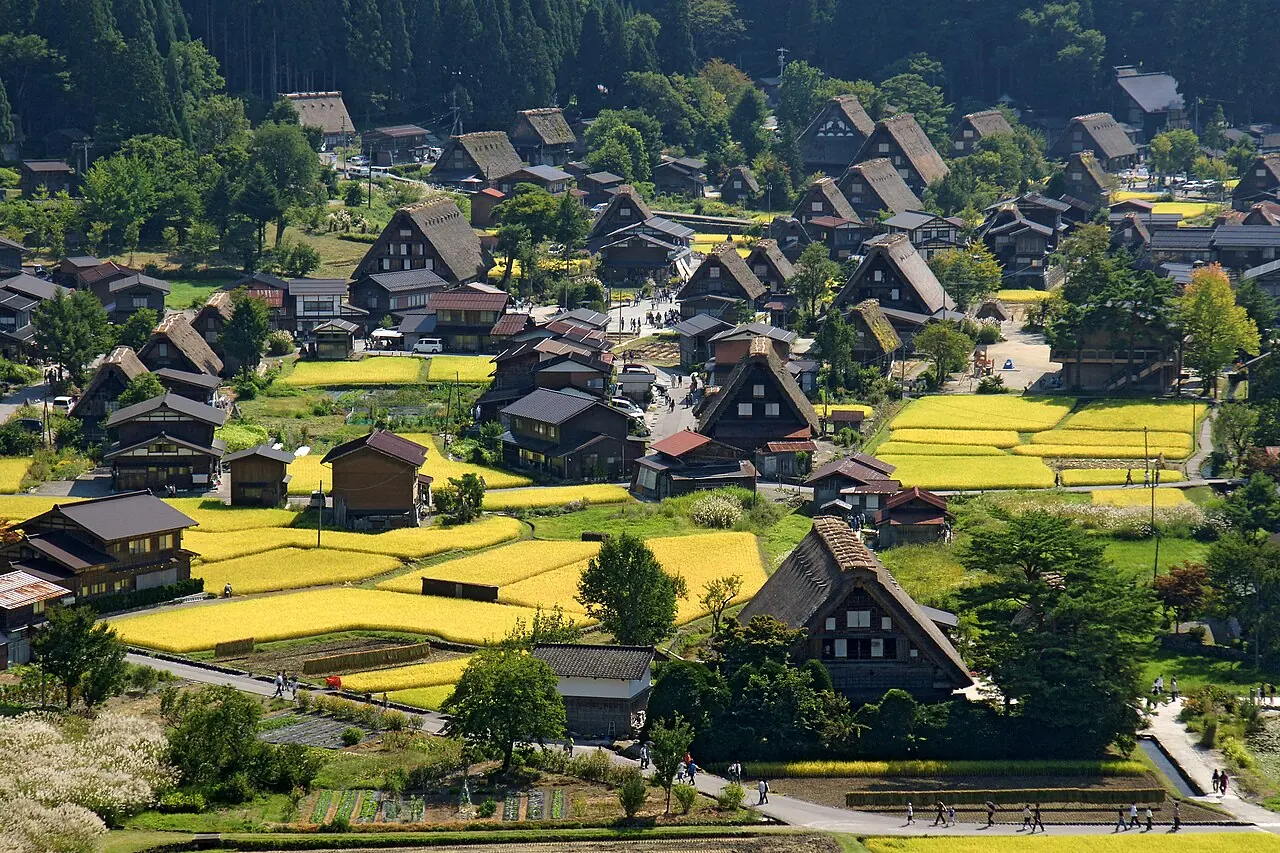
Ogimachi, Shirakawa-go (early autumn). Photo: 663highland / Wikimedia Commons / CC BY 2.5

- Five days covers Kanazawa, Shirakawa-go, Takayama and Matsumoto by bus; seven days adds Kamikochi from mid-April to mid-November, or Hakuba in winter.
- Until November 30, 2026, the three bus legs from Kanazawa to Matsumoto via Shirakawa-go and Takayama cost ¥10,000 per adult; from December 1 the first two legs rise to ¥2,900 each (¥10,200 if the Takayama – Matsumoto fare stays ¥4,400).
- In winter, drop Kamikochi: its last buses run on November 15, 2026. Check that the Takayama – Matsumoto bus is running before you build a winter plan around it.
In season, add Kamikochi; in winter, add Hakuba.
Kamikochi buses run from April 17 to November 15, 2026. Inside those dates, the 7-day Kamikochi plan keeps the core line through Kanazawa, Shirakawa-go and Takayama and adds a day in the valley.
In winter, take the Hakuba version, but confirm the Takayama – Matsumoto bus with Nohi Bus first.
- 1Core + Kamikochi7 days, April 17 – November 15, 2026
- 2Core5 days, all year with winter checks
- 3Core + Hakuba7 days, winter, after checking the Day 5 bus
These itineraries are models built from official timetables and fare tables, not a record of one trip. They follow the classic line through the northern Japanese Alps: Kanazawa, Shirakawa-go, Takayama and Matsumoto, with Kamikochi or Hakuba added if you have seven days. Every leg is a bus or a train.
Fares, seasons and reservation rules below were checked on official pages between October 15 and 20, 2026; the main bus fares, season dates and reservation rules were checked again on October 20, 2026. Two changes matter for anyone traveling this year: bus fares between Kanazawa, Shirakawa-go and Takayama rise on December 1, 2026, and the last Kamikochi buses run on November 15, 2026.
For the bigger picture, including the main routes and passes in the region, see my Japanese Alps without a car guide.
Which itinerary fits you?
| Plan | Days | Season | Route |
|---|---|---|---|
| Core | 5 | All year, with winter checks | Kanazawa → Shirakawa-go → Takayama → Matsumoto |
| Core + Kamikochi | 7 | April 17 – November 15, 2026 | Kanazawa → Shirakawa-go → Takayama → Kamikochi → Matsumoto |
| Core + Hakuba | 7 | Winter | Kanazawa → Shirakawa-go → Takayama → Matsumoto → Hakuba |
The order runs west to east, so you can fly into Tokyo or Osaka and reach Kanazawa by train, then leave from Matsumoto or Nagano back to Tokyo. If Kyoto is next on your trip, you can also arrive in Tokyo and leave from Matsumoto toward Kyoto by way of Nagoya, so you never go back the way you came; see Matsumoto to Kyoto by train below. For trains from Tokyo and Osaka, see "Getting to Kanazawa from Tokyo or Osaka" near the end of this page. I have not confirmed the rail fares, so check them with JR before you book.
5-day itinerary: Kanazawa to Matsumoto
Days 1–2: Kanazawa
- Sleep: Kanazawa, 2 nights. Staying near Kanazawa Station keeps Day 3 simple, because the Shirakawa-go bus leaves from the station's west exit.
- Do: Kenrokuen garden, the Higashi Chaya teahouse district and Omicho market are all in the city.
- Book ahead: the Kanazawa – Shirakawa-go – Takayama bus. Hokutetsu runs it as a reserved-seat service, and bookings open one month before the travel date. If you rejoin at Shirakawa-go on a bus that runs only between Shirakawa-go and Takayama, check Nohi's timetable: departures marked R require a reservation, and the others cannot be booked.
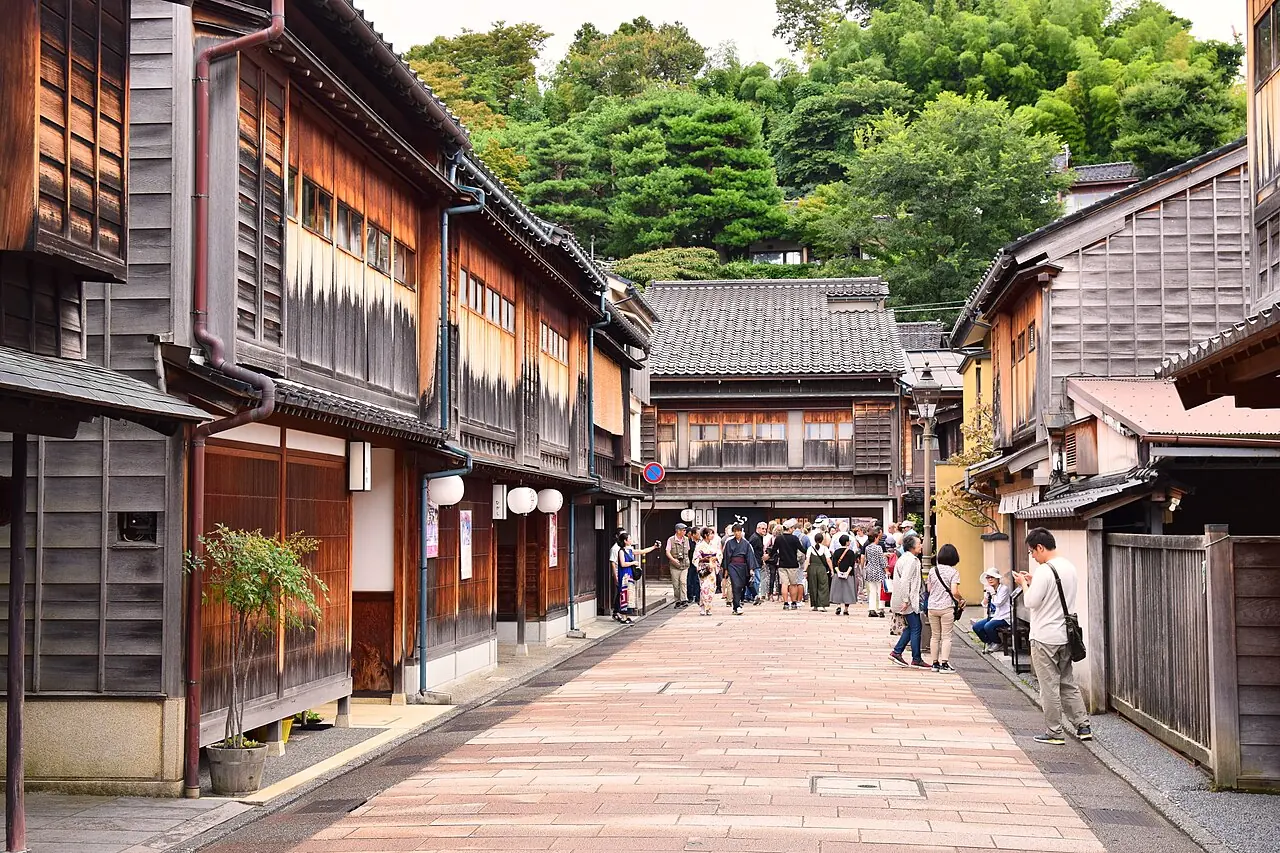

Day 3: Shirakawa-go stop, then Takayama
- Morning: bus from Kanazawa Station west exit to Shirakawa-go, about 1 hour 15 minutes. ¥2,800 through November 30, 2026; ¥2,900 from December 1.
- Midday: leave your bags in bag storage or the coin lockers at the Shirakawa-go bus terminal and walk the village. Bag storage costs from ¥500 (small and medium) or from ¥1,000 (large), takes bags from 8:00 to 17:00 and keeps them for the same day only. The tourist association does not list locker prices or hours.
- Afternoon: bus on to Takayama, about 50 minutes. ¥2,800 through November 30; ¥2,900 from December 1.
- Sleep: Takayama.
Where your luggage goes: Kanazawa hotel → luggage hold → Shirakawa-go bag storage or locker → luggage hold → Takayama hotel. The hold is shared and space is limited, so a very large suitcase may not fit. Nohi Bus also asks you to keep power banks with you in the cabin, not in the luggage hold.
Two tickets, not one: a Kanazawa – Takayama ticket is not valid once you get off on the way. If you stop in Shirakawa-go, you buy each leg separately.
Day 4: Takayama
- Do: the old town streets, the morning markets and the Miyagawa riverside are all walkable from the station.
- Luggage: if you need to store bags on the day you leave Takayama, the coin lockers at Takayama Station (i-CAFE and the Nohi Bus Center) cost ¥400, ¥600 or ¥700 depending on size, take cash only and hold bags for up to three days.
- Sleep: Takayama.
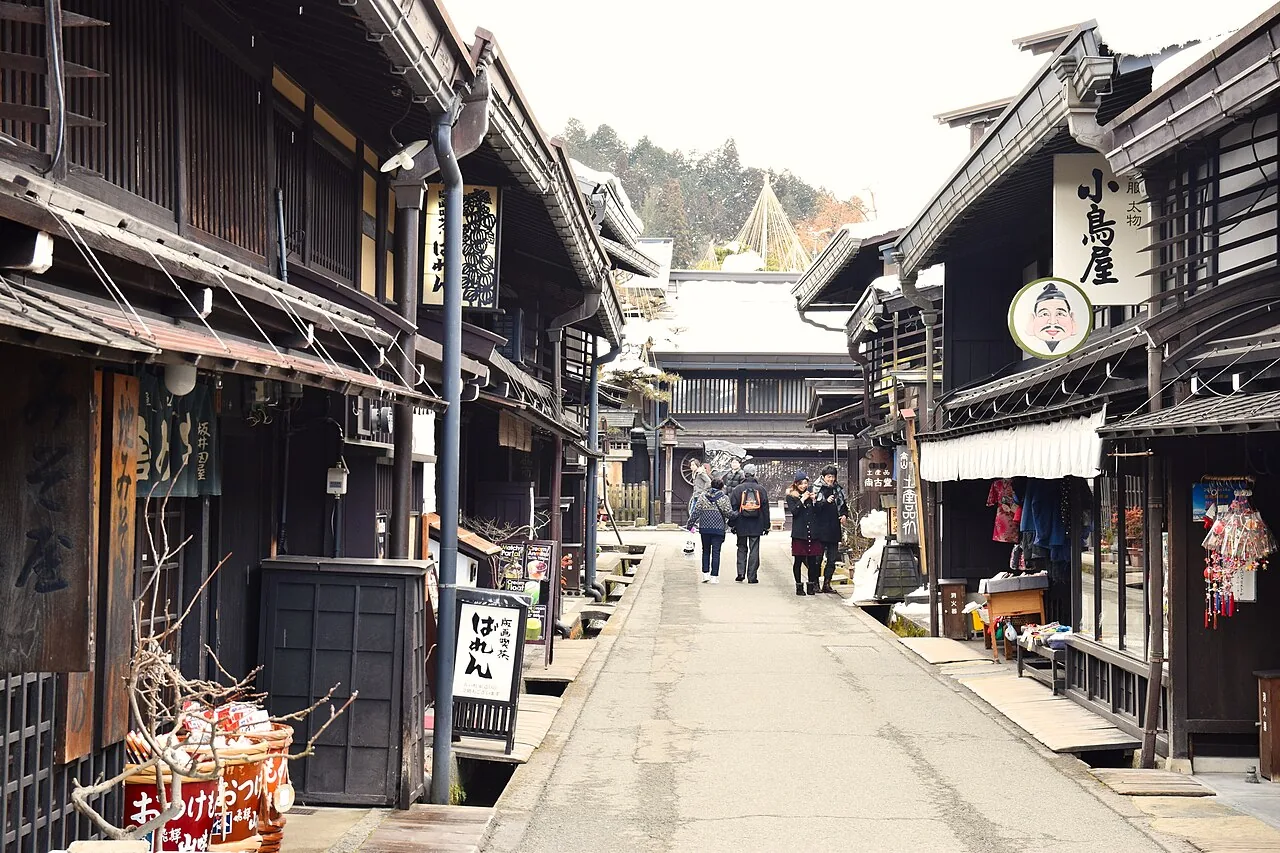

Day 5: Takayama to Matsumoto
- Bus: Nohi Bus Center (Takayama) to Matsumoto Bus Terminal via Hirayu Onsen. ¥4,400 (confirm on the booking screen). Nohi lists the trip as about 2 hours 20 minutes; individual timetable runs are longer, so allow about 2 hours 30 minutes to 2 hours 50 minutes.
- Reservation: required, from one month before the travel date on highwaybus.com, or by phone at Nohi Bus's reservation center (+81 577-32-1688, 9:00–17:00).
- Then: an afternoon in Matsumoto for the castle, and a night there if you leave by train the next morning. For trains onward, see Matsumoto to Kyoto by train below.
7-day itinerary: add Kamikochi (April to November)
Follow Days 1–4, then:
Day 5: a second day in Takayama
Use the extra day to slow down in Takayama before the early start on Day 6.
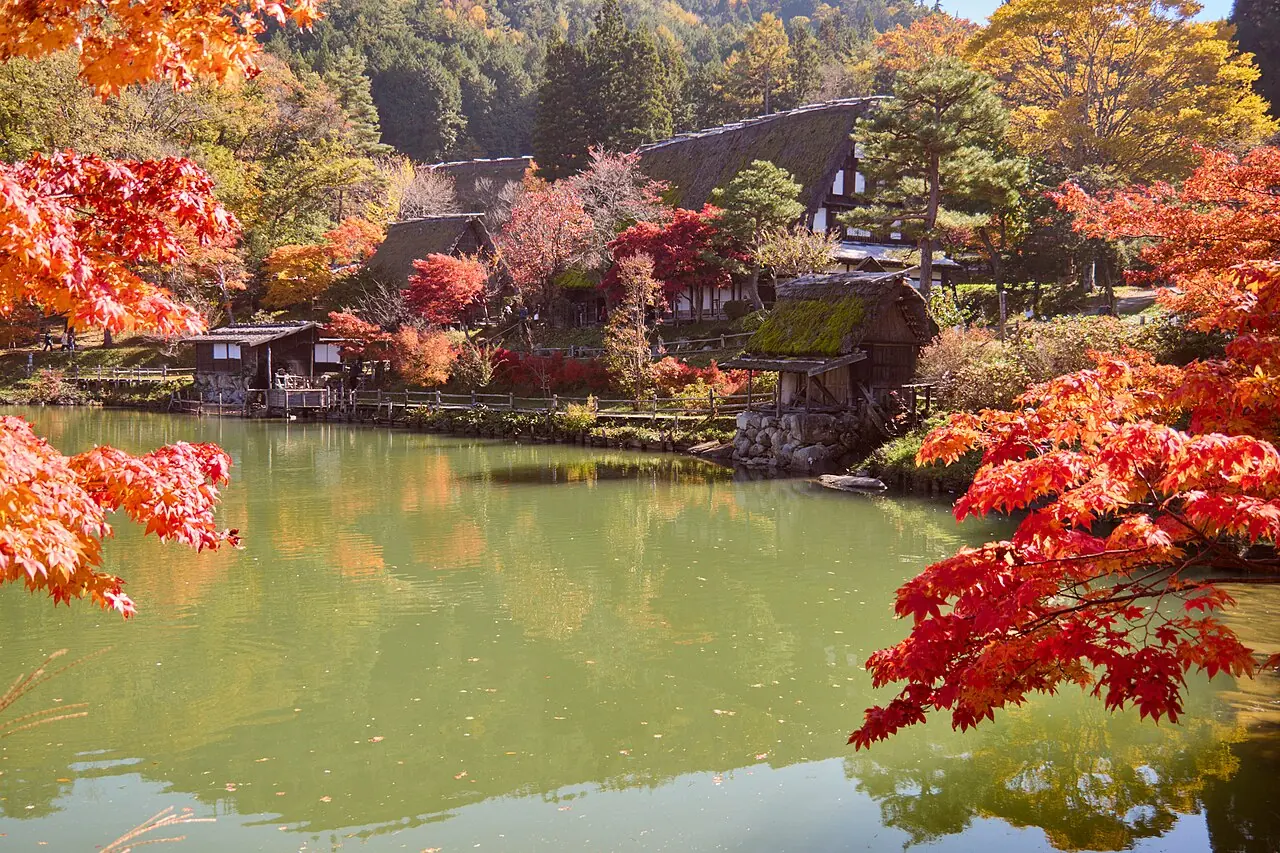

Day 6: Takayama to Kamikochi to Matsumoto
- Takayama → Kamikochi: Nohi Bus via Hirayu Onsen. A one-way connecting ticket costs ¥3,000 (a 7-day return is ¥5,800). Nohi describes the trip as about 1 hour 30 minutes from Takayama via Hirayu Onsen, and about 30 minutes from Hirayu Onsen; leave time for the change. Seats cannot be reserved: all buses are first come, first served. Check the first departure from Takayama on the timetable before you plan the day.
- Kamikochi: walk the flat valley paths along the Azusa River.
- Kamikochi → Shin-Shimashima: Alpico bus, about 1 hour 5 minutes (7:50 from Kamikochi arrives at 8:55 in Alpico's timetable). Check the last departure from Kamikochi before you set out. Alpico runs a priority-reservation system: reserved passengers board first, and others can take any empty seats. Reservations open at 00:00 (midnight) one month before the travel date. Since September 1, 2026, stops between Kamikochi and Sawando Ohashi on the Shin-Shimashima bus are boarding only; you can get off only at Azumi Shisho-mae and Shin-Shimashima Station.
- Shin-Shimashima → Matsumoto: Alpico Kamikochi Line train, about 30 minutes (9:22 from Shin-Shimashima arrives at 9:51 in Alpico's timetable).
- Sleep: Matsumoto.
Where your luggage goes: this is the one day a big suitcase gets in the way. The day has four separate legs with three changes, and Kamikochi is a walking area.
Yamato's TA-Q-BIN delivery service takes it from your Takayama hotel to your Matsumoto hotel and charges by bag size and by region. Ask for the rate and the delivery date when you send it.
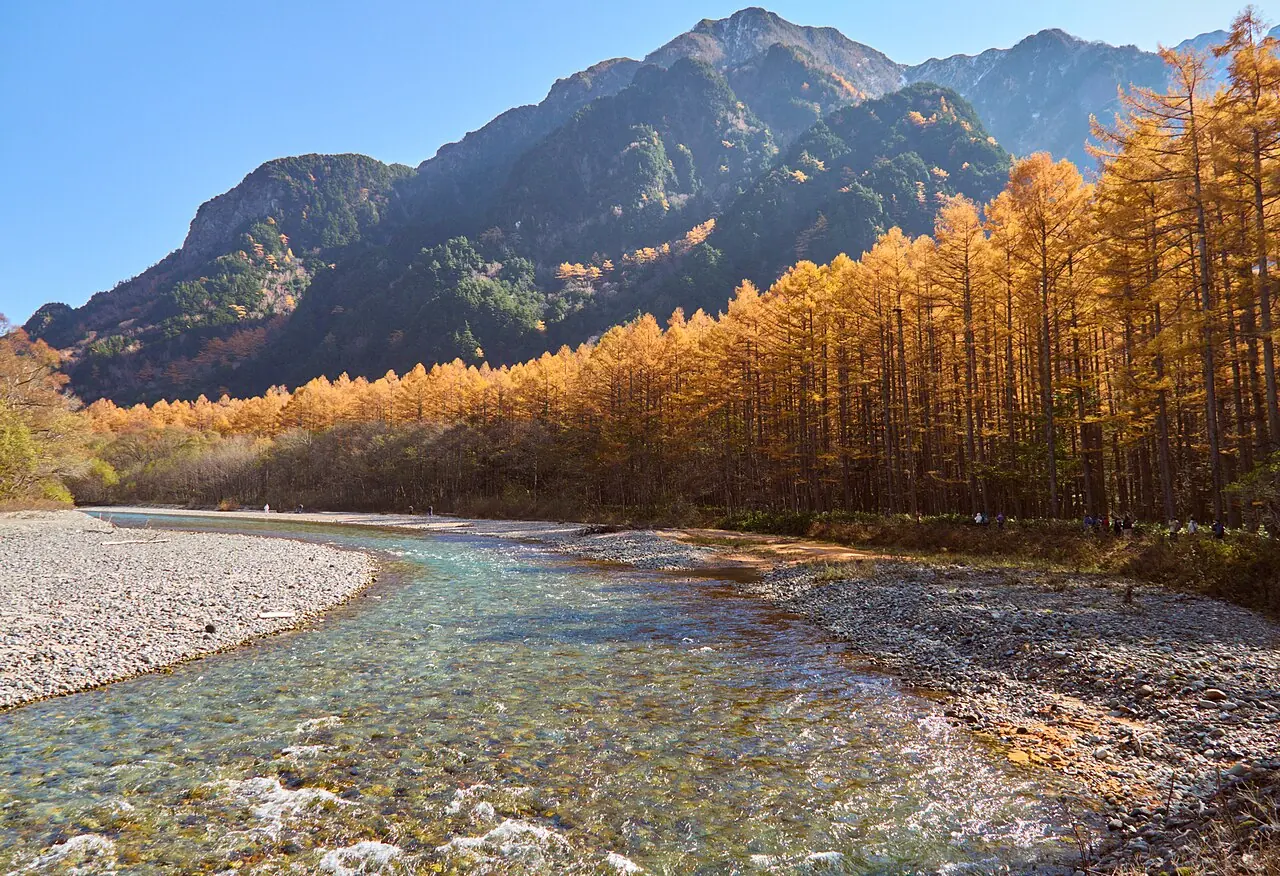

Day 7: Matsumoto
Collect your suitcase, see the castle and the old streets, then head home. Both Kamikochi bus companies run from April 17 to November 15 in 2026; outside those dates, use the Hakuba version instead.
7-day itinerary: add Hakuba (winter)
Nohi Bus's Takayama – Matsumoto pages list no winter timetable and do not say the route stops in winter; the only seasonal note is extra departures from December 29, 2026 to January 3, 2027. Before you commit to this plan, confirm the winter service with Nohi Bus.
Skis and snowboards: Hokutetsu's page for the Kanazawa – Shirakawa-go – Takayama bus says skis and snowboards are not allowed, both on board and in the luggage hold. If you are bringing your own gear, send it ahead to your Hakuba lodging.
Follow Days 1–5 of the core plan, but stay the night in Matsumoto, then:
Day 6: Matsumoto to Hakuba
JR Oito Line
- In the November 2026 timetable, two local trains run every day from Matsumoto to Minami-Otari without a change (9:20 and 11:09), plus the limited express Azusa at 10:41 to Hakuba and the Resort View Furusato rapid at 11:43 to Minami-Otari on the days it runs.
The Matsumoto to Hakuba by train or bus guide compares the options in more detail.
Direct bus — winter 2026–27 not announced
- Alpico ran a direct Matsumoto – Hakuba express bus in winter 2025–26, from December 13 to March 8, once a day each way, reserved seats only.
- Sleep: Hakuba. The Hakuba without a car guide covers getting around the valley once you arrive.
Day 7: Hakuba, then leave via Nagano
- Bus to Nagano: Alpico express buses link Hakuba and Nagano Station. In winter 2025–26, Alpico ran both reservation-only and non-reserved buses; most non-reserved buses ran non-stop between Hakuba Happo and Nagano Station. Alpico's current timetable and fares run to November 30, 2026, and no 2026–27 winter timetable was posted when checked on October 20, 2026.
- From Nagano Station, the Hokuriku Shinkansen runs to Tokyo.
Matsumoto to Kyoto by train (or back to Tokyo)
The 5-day and Kamikochi plans end in Matsumoto, so you can arrive in Tokyo and leave toward Kyoto. The trains below leave in the morning, so they suit a night in Matsumoto first. Times are from JR East's November 2026 timetable, checked October 24, 2026. I have not confirmed the fares.
- Back to Tokyo: the limited express Azusa runs from Matsumoto to Shinjuku. On weekdays the Azusa 22 leaves Matsumoto at 11:10 and reaches Shinjuku at 13:48.
- On to Kyoto: the limited express Shinano runs from Matsumoto to Nagoya. In the weekday timetable the Shinano 8 leaves Matsumoto at 10:51 and reaches Nagoya at 13:01. Change there to the Tokaido Shinkansen for Kyoto: JR Tokai Tours, JR Central's travel agency, gives about 33 minutes by Nozomi and about 1 hour by Kodama.
- Stopping on the Nakasendo on the way (adds a day): the 10:20 local train on the JR Chuo Line reaches Narai, a post town on the old road, at 11:12 with no change (every day). The same train continues to Nakatsugawa at 12:54, the station for the bus to Magome. See Narai and the Kiso Valley post towns and the Magome to Tsumago walk. I have not confirmed bag storage at Narai Station.
For trains into the region from Tokyo, Nagoya, Kyoto and Osaka, see getting into the Alps in my regional guide.
Estimated transport cost (per adult)
I have only added up fares confirmed on official pages. "Not confirmed" or "—" means I could not confirm the fare.
| Day | Leg | Until Nov 30, 2026 | From Dec 1, 2026 |
|---|---|---|---|
| 3 | Kanazawa → Shirakawa-go (bus) | ¥2,800 | ¥2,900 |
| 3 | Shirakawa-go bag storage (large) | from ¥1,000 | from ¥1,000 |
| 3 | Shirakawa-go → Takayama (bus) | ¥2,800 | ¥2,900 |
| Kanazawa to Takayama with the stop | from ¥6,600 | from ¥6,800 | |
| 5 | Takayama → Matsumoto (bus) | ¥4,400 | not confirmed |
| Kanazawa to Matsumoto, core plan | from ¥11,000 | from ¥11,200, if the ¥4,400 holds | |
| 6 (Kamikochi plan) | Takayama → Kamikochi (bus) | ¥3,000 (runs to Nov 15) | no service |
| 6 (Kamikochi plan) | Kamikochi → Shin-Shimashima (bus) | not confirmed (runs to Nov 15) | no service |
| Kanazawa to Kamikochi with the stop, confirmed legs only | from ¥9,600 | — |
Notes on the table:
- The core-plan bus fares without bag storage are ¥2,800 + ¥2,800 + ¥4,400 = ¥10,000. From December 1 they are ¥2,900 + ¥2,900 + ¥4,400 = ¥10,200 if the Takayama – Matsumoto fare stays ¥4,400; Nohi has not announced a change to that fare. Bag storage is priced "from" ¥1,000 for a large bag, so the totals with it are minimums.
- The Kamikochi plan replaces the Takayama → Matsumoto bus, so do not add the ¥4,400 to it. Its ¥9,600 minimum is ¥6,600 + ¥3,000; the Kamikochi → Shin-Shimashima bus and the Shin-Shimashima → Matsumoto train are not included.
- The Takayama – Matsumoto fare of ¥4,400 is from Nohi Bus's fare table; confirm it on the booking screen.
- Alpico publishes Shin-Shimashima → Kamikochi at ¥3,100 (fare table checked October 15, 2026), but not the opposite direction in the table I checked.
- For reference, Alpico's spring-to-autumn fare table lists Nagano → Hakuba at ¥2,900 (checked October 15, 2026). The winter fare and the Hakuba → Nagano direction are not confirmed, so the Hakuba plan has no line in the table.
- Not included: trains to and from Tokyo, Osaka or Kyoto, Matsumoto – Hakuba trains, the Shin-Shimashima – Matsumoto train, buses inside Hakuba, and hotels.
Should you buy a pass instead?
| Pass | Price (adult) | Valid | Covers on this route |
|---|---|---|---|
| Takayama-Hokuriku Area Tourist Pass | ¥19,800 | 5 days | Kanazawa – Shirakawa-go – Takayama buses (reservation needed) and JR lines in the area; winter validity not confirmed |
| Alpine-Takayama-Matsumoto Area Tourist Pass | ¥24,500 | 5 days; usable April 15 – November 10, 2026 | JR lines including Matsumoto – Shinano-Omachi, and the Tateyama Kurobe Alpine Route |
For the bus-based route in this guide, single tickets are cheaper. Kanazawa to Takayama via Shirakawa-go costs ¥5,600 in single tickets through November 30 (¥5,800 from December 1), against ¥19,800 for the Takayama-Hokuriku pass. Neither pass lists the Takayama – Matsumoto highway bus on the pages I checked.
Where to sleep each night
| Night | 5-day plan | 7-day Kamikochi plan | 7-day Hakuba plan |
|---|---|---|---|
| 1–2 | Kanazawa | Kanazawa | Kanazawa |
| 3–4 | Takayama | Takayama | Takayama |
| 5 | Matsumoto (if you leave by train the next morning) | Takayama | Matsumoto |
| 6 | — | Matsumoto | Hakuba |
Pick hotels near the stations or bus terminals in Kanazawa, Takayama and Matsumoto. Every move in these plans starts at one of them, so a short walk with luggage saves time each morning.
- Hakuba (night 6 of the Hakuba plan): the Hakuba without a car guide covers the buses and shuttles inside the valley.
- Narai (an extra night on the way to Kyoto): the number of places to stay on the Nakasendo comes from the tourist associations' lists.
What changes in winter
- Kamikochi: no buses after November 15, 2026; the valley has no public transport in winter.
- Takayama – Shirakawa-go – Kanazawa: the bus runs in winter, but heavy snow, traffic or highway closures can delay it by 2 hours or more. Some departures from Takayama do not run on weekends, holidays, August 13–15 or December 29 – January 3.
- Gokayama (Suganuma): buses stop there only from April to November.
- Skis and snowboards: not allowed on the Kanazawa – Shirakawa-go – Takayama bus.
- Alpine-Takayama-Matsumoto pass: usable until November 10, 2026.
- Takayama – Matsumoto: winter service not confirmed; Nohi Bus lists extra departures from December 29, 2026 to January 3, 2027, but no winter timetable. Check with Nohi Bus.
- Whether the Takayama – Matsumoto bus runs in winter 2026–27
- The Kamikochi → Shin-Shimashima bus fare
- The winter 2026–27 Nagano – Hakuba timetable and fares
- The JR Oito Line timetable for March 2027
Build in a spare half day in winter. A two-hour delay on Day 3 can push you past 17:00, when bag storage in Shirakawa-go stops taking bags.
Getting to Kanazawa from Tokyo or Osaka
Take the Hokuriku Shinkansen; JR West lists Tokyo – Kanazawa at 2 hours 28 minutes. I have not confirmed the fare.
JR West's HOKURIKU One-way Ticket covers Osaka to Kanazawa in ordinary seats on the Thunderbird limited express and the Hokuriku Shinkansen from Tsuruga, for ¥8,000 (adult; price shown as of February 5, 2025). It is only for holders of a foreign passport entering Japan as temporary visitors, and it is sold by select overseas travel agencies, not in Japan. I have not confirmed the travel time or the regular fare.
Frequently asked questions
How many days do you need for the Japanese Alps without a car?
Five days is enough for Kanazawa, Shirakawa-go, Takayama and Matsumoto at a steady pace. The bus legs are manageable: about 1 hour 15 minutes from Kanazawa to Shirakawa-go, about 50 minutes on to Takayama, and about 2 hours 20 minutes from Takayama to Matsumoto. Add two days for Kamikochi or Hakuba.
Is it cheaper to stop in Shirakawa-go or go straight to Takayama?
Going straight is cheaper. Kanazawa to Takayama is ¥4,200 on one ticket, but the ticket is not valid after a stopover, so stopping means two tickets of ¥2,800 each: ¥1,400 more, plus bag storage. From December 1, 2026 the through ticket is ¥4,400 and each leg ¥2,900, so the stop still costs ¥1,400 more.
Can I include Kamikochi in December?
No. Both bus companies that serve Kamikochi end their 2026 season on November 15, and there is no public transport into Kamikochi in winter.
Where do I leave luggage in Shirakawa-go?
The Shirakawa-go bus terminal has coin lockers, but the tourist association does not list their prices or hours. A bag storage service takes bags from 8:00 to 17:00 for the same day only: from ¥500 for small and medium bags, from ¥1,000 for large. If it is full, the tourist association also keeps bags. Luggage holds on the bus are shared and limited, so very large bags may not fit.
Do I need to book the Takayama–Matsumoto bus?
Yes. Reservations are required. They open one month before the travel date on highwaybus.com, or by phone with Nohi Bus.
Sources
- Limited express Azusa 22 timetable (November 2026) — JR East
- Limited express Shinano 8 timetable (November 2026) — JR East
- Kyoto to Nagoya by Shinkansen — JR Tokai Tours
- Local train 1826M, Matsumoto – Nakatsugawa (November 2026) — JR East
- Hokuriku Shinkansen — JR West
- HOKURIKU One-way Ticket (Discounted One-way Ticket) — JR West
- Takayama – Shirakawa-go – Kanazawa bus (English) — Nohi Bus
- Takayama – Shirakawa-go – Kanazawa bus fares — Nohi Bus
- Fare changes from December 1, 2026 — Nohi Bus
- Kanazawa – Shirakawa-go – Takayama express bus — Hokutetsu
- Takayama – Matsumoto highway bus (English) — Nohi Bus
- Takayama – Hirayu – Kamikochi bus — Nohi Bus
- Shin-Shimashima – Kamikochi bus — Alpico Kotsu
- Kamikochi bus stop changes from September 1, 2026 — Alpico Kotsu
- Kamikochi bus fare table (2026) — Alpico Kotsu
- Coin lockers at Takayama Station — Hida Takayama Tourism
- Shirakawa-go FAQ: luggage and the shuttle bus (Japanese) — Shirakawa-go Tourist Association
- Alpine-Takayama-Matsumoto Area Tourist Pass — JR West
- Takayama-Hokuriku Area Tourist Pass — JR West
- Oito Line timetable from Matsumoto (November 2026) — JR East
- Matsumoto – Hakuba express bus — Alpico Kotsu
- Nagano – Hakuba express bus — Alpico Kotsu
- Nagano – Hakuba winter timetable (2025–26) — Alpico Group
- Nagano – Hakuba fare table (spring to autumn) — Alpico Kotsu
- Kamikochi – Shin-Shimashima bus and Kamikochi Line train timetable (May 1, 2026 edition) — Alpico Kotsu