The Nakasendo Trail Without a Car: Sections, Bags and Stays
Walk the old Edo-period road between wooden post towns, ride the JR Chuo Line between sections and send your bag ahead over Magome Pass.
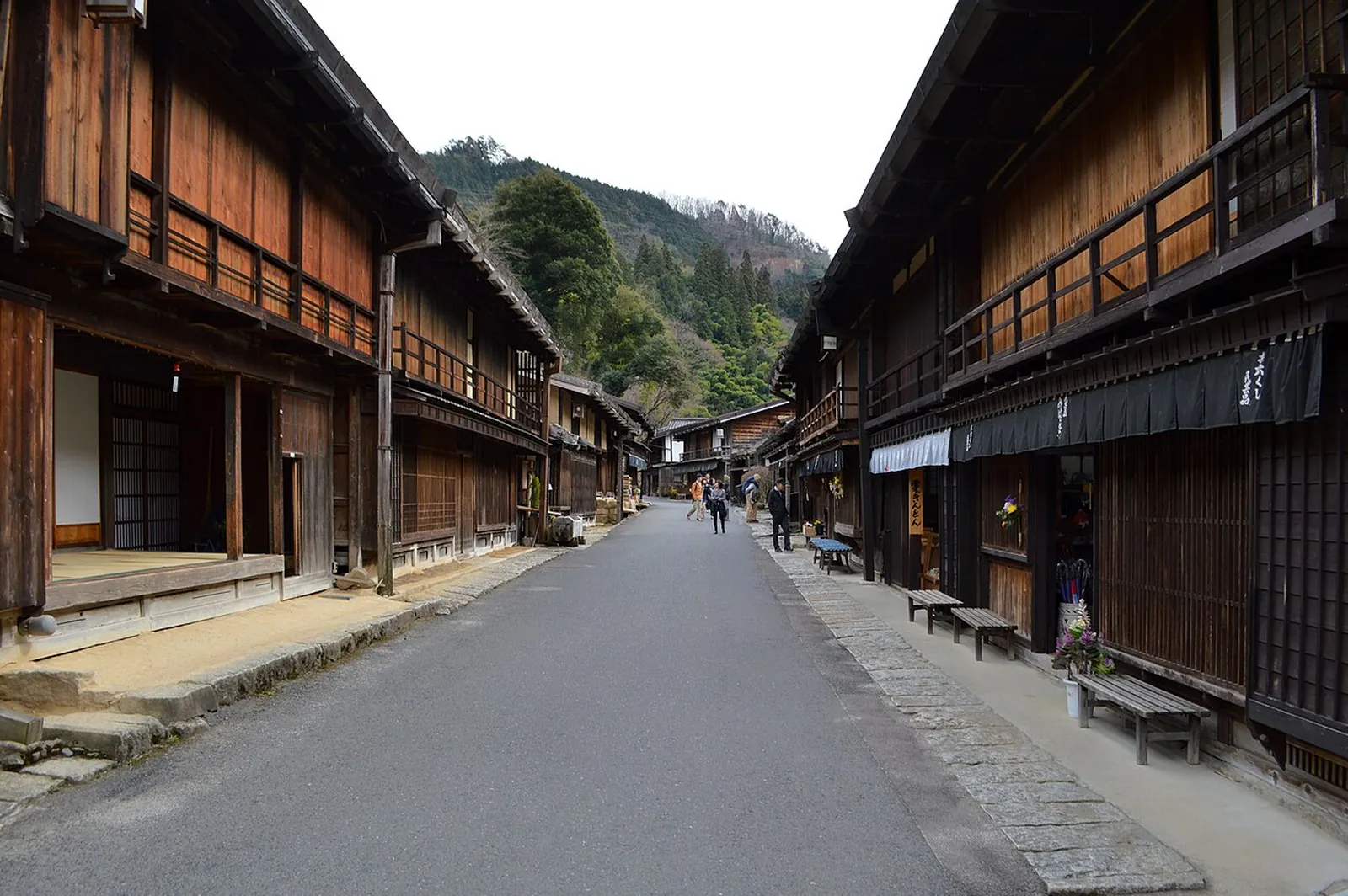
Photo: DimiTalen / Wikimedia Commons / CC0
- For a first walk: Magome to Tsumago, 9 km in 2.5 to 3 hours, with buses at both ends and a ¥1,000 bag service from March 20 to November 30, 2026.
- For a second day, ride one stop from Narai to Yabuhara and walk back over the Torii Pass: about 6.4 km in about 3 hours, ending where you left your bag.
- Sleep on the old road: the tourist associations list 8 places to stay in Magome, 8 in Tsumago and 11 in Narai.
For a first walk, Magome to Tsumago: 9 km over Magome Pass, with a bus at both ends and a bag service in season.
The Tsumago Tourist Association gives 2.5 to 3 hours on foot, with a bus at each end.
For a second day, add Narai and the Torii Pass, farther north on the same JR line.
- Post towns
- Magome, Tsumago, Narai
- Rail line
- JR Chuo Line
- Bag service
- Magome – Tsumago, Mar 20 – Nov 30, 2026
- Places to stay
- Magome 8, Tsumago 8, Narai 11 (official lists)
Photo: lumoplank / Wikimedia Commons / CC0
Stations and services
- Nakatsugawa StationKita-Ena Kotsu bus to Magome, ¥80025 min
- Nagiso StationNagiso town bus to Tsumago, ¥3007 min
- Narai StationOn foot to Narai-juku1 min
- Kiso-Fukushima StationChange from the Shinano to a local train for Narai22 min
- Bag serviceMagome – Tsumago · Mar 20 – Nov 30, 2026¥1,000
Times and prices checked on October 20, 2026.
The Nakasendo is a historic highway of Edo-period Japan, with 69 post towns along its route. In the Kiso Valley, between Nagoya and Matsumoto, several of those post towns survive as rows of wooden inns and shops, linked by stretches of the old road you can still walk. The JR Chuo Line runs along the same valley, so you can walk the old road by day and ride the train between sections without a car.
This guide covers the Kiso Valley part of the Nakasendo: why the post towns are worth the trip, which sections to walk, how to get there by train, where to sleep and what changes with the seasons. Times, fares and inn lists come from the Magome, Tsumago and Narai-juku tourism associations, the Nagano and Gifu prefectural tourism associations, Nakatsugawa City, Nagiso Town and JR Central, checked on October 20, 2026.
Why go: an old road with its towns still standing
Tsumago-juku (Nagiso, Nagano): in 1971 Tsumago's residents adopted a charter that puts preservation ahead of everything else, with a rule not to sell, rent out or tear down the houses and land along the old road. In 1976 Tsumago was selected as a nationally protected group of traditional buildings, after a preservation movement that the Nagano Prefecture Tourism Association says came ahead of the rest of the country. That rule is why the street still looks the way it does, and it comes up again in "Could you live here?" at the end of this guide. Cars are not allowed in the post town from 10:00 to 16:00.
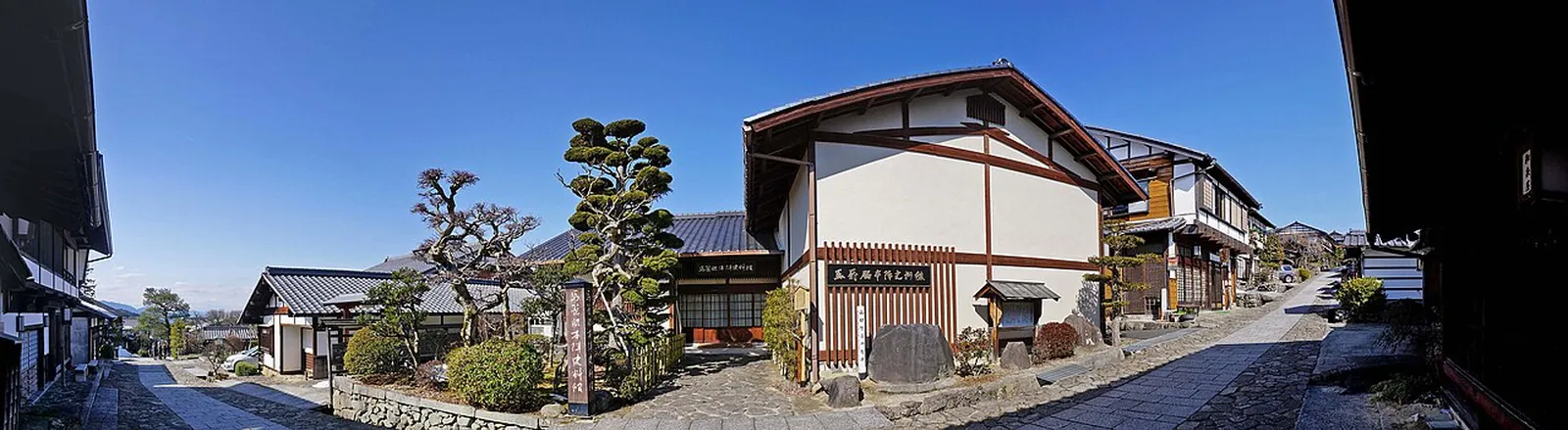
Magome-juku (Nakatsugawa, Gifu): a post town built along a stone-paved slope. It is the birthplace of the writer Shimazaki Toson, and the Toson Memorial Museum on the site of his family home shows his manuscripts, according to Nakatsugawa City. Magome is the southern start of the Magome – Tsumago walk, 25 minutes by bus from JR Nakatsugawa Station.
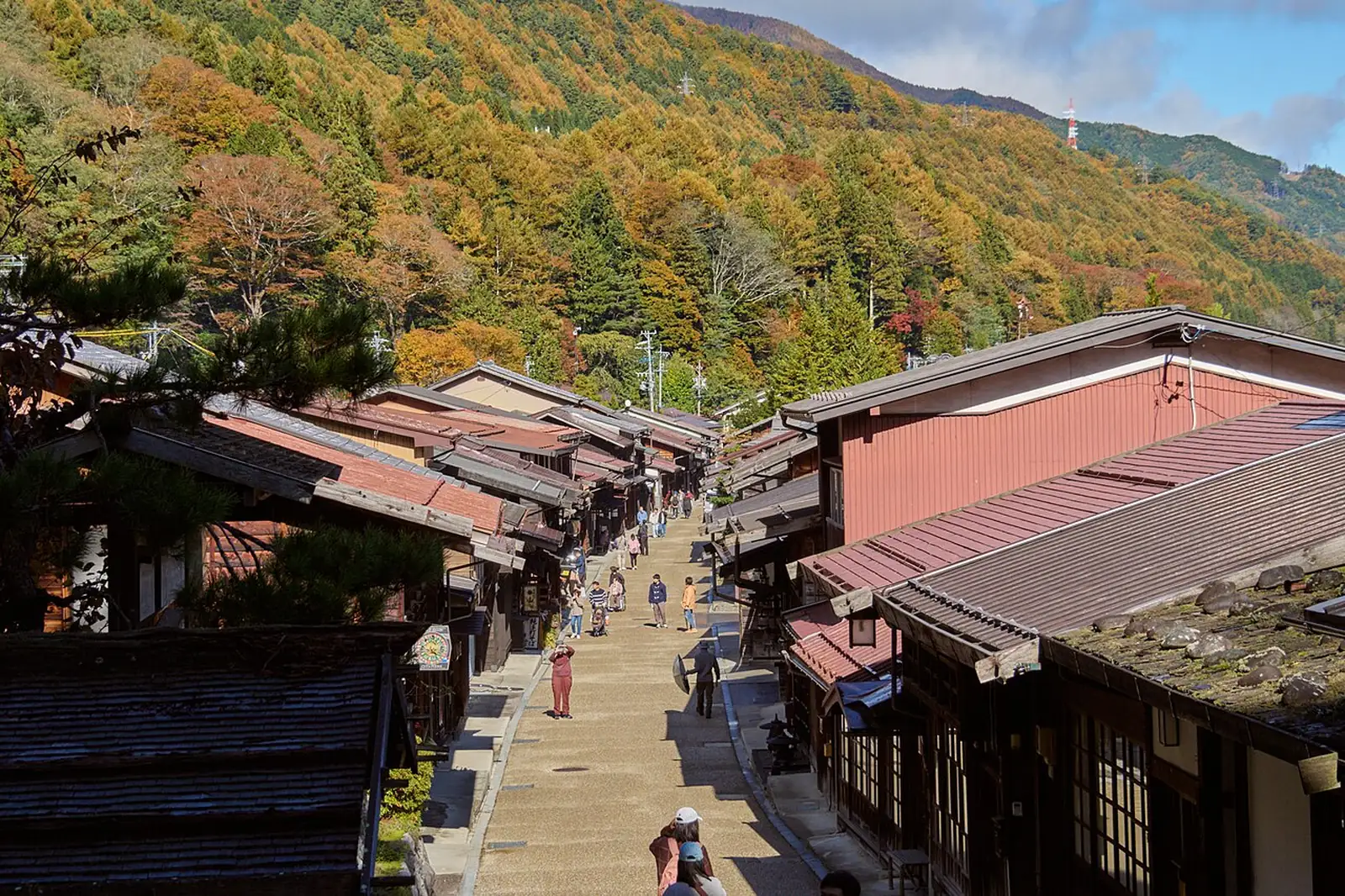
Narai-juku (Shiojiri, Nagano): the post town runs about 1 km north to south along the Nakasendo. The Nagano Prefecture Tourism Association calls it the longest post town in Japan; in its busy years it was nicknamed "Narai of a thousand houses." Narai is also a nationally protected group of traditional buildings, and the Torii Pass path links Narai-juku with Yabuhara-juku.
The sections you can walk
| Section | Distance | Time on foot | Stations | Bag service |
|---|---|---|---|---|
| Magome – Tsumago | About 9 km | 2.5–3 hr | Nakatsugawa (bus to Magome), Nagiso (bus from Tsumago) | Yes, Mar 20 – Nov 30, 2026 |
| Yabuhara – Torii Pass – Narai | About 6.4 km | About 3 hr | Yabuhara, Narai | — |
| Nagiso Station – Tsumago | — | About 40 min | Nagiso | — |
| Ochiai stone paving | About 800 m | 15 min from the station | Ochiaigawa | — |
"—" in the bag column means no bag service is listed on the official pages for that section. The Torii Pass distance and time are station to station, from the Nagano Prefecture Tourism Association.
Magome – Tsumago
- Bus from JR Nakatsugawa Station to Magome, about 25 minutes.
- Walk 9 km over Magome Pass (790 m) to Tsumago, 2.5 to 3 hours.
- Bus from Tsumago to JR Nagiso Station, about 9 minutes.
The full guide is in my Magome to Tsumago hike guide: which way to walk, the bag service and the bus timetable back.
Yabuhara – Narai over the Torii Pass
- Leave your bag at your inn in Narai or at the tourist information center at JR Narai Station (¥700 a bag, 8:40–16:40).
- Take a local train one stop from Narai to Yabuhara, about 6 minutes: for example, the 8:44 from Narai reaches Yabuhara at 8:50 if you stayed the night in Narai. If you arrive at Narai on the 9:17, the next train to Yabuhara is the 11:21.
- Walk about 6.4 km from Yabuhara Station over the Torii Pass to Narai Station, about 3 hours.
Ochiai stone paving
- Walk 15 minutes from JR Ochiaigawa Station.
- Follow about 800 m of old stone-paved road in Nakatsugawa.
Getting there without a car
The Kiso Valley post towns sit along the JR Chuo Line between Nagoya and Shiojiri (March 2026 timetable).
- From Nagoya: on weekdays the limited express Shinano leaves Nagoya every hour from 7:00 to 16:00, then at 17:40, 18:40 and 19:40. Every Shinano stops at Nakatsugawa (for Magome) and Kiso-Fukushima. Only 4 a day stop at Nagiso (for Tsumago): on weekdays they leave Nagoya at 7:00, 10:00, 15:00 and 19:40.
- From Kyoto: take the Tokaido Shinkansen to Nagoya, about 33 minutes on the Nozomi according to JR Central Tours, then the Shinano.
- To Narai: no Shinano stops at Narai or Yabuhara. Change at Kiso-Fukushima to a local train, about 22 minutes to Narai: the 7:00 Shinano from Nagoya reaches Kiso-Fukushima at 8:29, and the 8:55 local reaches Narai at 9:17.
- From Tsumago to Narai: local trains run from Nagiso to Narai without a change, about 1 hour 6 minutes (the 8:11 from Nagiso reaches Narai at 9:17). In the daytime, local trains leave Narai toward Shiojiri at 9:17, 11:26, 13:26, 15:52 and 16:57, and most continue to Matsumoto.
From the station to the old road:
| Post town | From | How | Time |
|---|---|---|---|
| Magome | Nakatsugawa Station | Kita-Ena Kotsu bus, ¥800 | About 25 min |
| Tsumago | Nagiso Station | Nagiso town bus, ¥300 | About 7 min |
| Tsumago | Nagiso Station | On foot | About 40 min |
| Narai | Narai Station | On foot | 1 min |
| Ochiai stone paving | Ochiaigawa Station | On foot | 15 min |
Between Magome and Tsumago, a luggage service carries bags over the pass for ¥1,000 each, Mar 20 – Nov 30, 2026. No forwarding service is listed for Narai; leave your bag at your inn or at the Narai Station tourist information center.
Drop-off times, the winter service and bag storage are in my guide to the Magome to Tsumago bag service and buses. The Matsumoto side of the Japan Alps connects to the same line: see my Japanese Alps without a car guide for routes and passes around Matsumoto.
Getting to the Kiso Valley from Tokyo or Osaka
Tokaido Shinkansen to Nagoya, then the limited express Shinano on the JR Chuo Line. The Tsumago Tourist Association gives about 2 hours 40 minutes from Tokyo to Nagiso.
Tokaido Shinkansen from Shin-Osaka to Nagoya, then the Shinano. The Tsumago Tourist Association gives about 1 hour 55 minutes from Shin-Osaka to Nagiso.
Where to stay without a car
Sleeping in a post town lets you start walking early, and your bag only moves once. Narai-juku is 1 minute from its station; Tsumago and Magome are a short bus ride from theirs.
| Post town | Places to stay on the official list | Who keeps the list |
|---|---|---|
| Magome | 8 | Magome Tourist Association |
| Tsumago | 8 (2 ryokan, 5 minshuku, 1 private home stay) | Tsumago Tourist Association |
| Narai | 11 (5 ryokan, 6 minshuku) | Narai-juku Tourism Association |
Numbers are the entries on each association's list on October 20, 2026. With only 8 places each on the Magome and Tsumago lists and 11 on Narai's, book before you fix your dates.
Seasons
Gifu Prefecture's bear caution is in force until the bears hibernate. Earlier this year, Nagano Prefecture issued a bear warning for the Kiso region, including Nagiso, from June 26 to July 10, 2026. The tourist information centers in Magome and Tsumago rent bear bells.
- Bag service season: the regular Magome – Tsumago service runs March 20 to November 30, 2026. From December 1, 2026 to March 19, 2027, the temporary service costs ¥4,500 a trip for up to 3 bags.
- Rain: the stone paving between Magome and Tsumago is slippery after rain.
- Winter: the official walking pages do not state a winter closure. Ask the local tourist information center about snow and ice before walking between December and March.
- Whether the paths are clear of snow and ice between December and March
- A luggage service between Tsumago and Narai
More on the route


Frequently asked questions
Which part of the Nakasendo should I walk?
For a first walk, Magome to Tsumago in the Kiso Valley: 9 km over Magome Pass, buses at both ends and a bag service in season. For a second day, add Narai and the Torii Pass.
Can you walk the Nakasendo without a car?
Yes. The Kiso Valley post towns sit on or near the JR Chuo Line. Narai is 1 minute from Narai Station, Tsumago is about 7 minutes by bus from Nagiso Station and Magome is about 25 minutes by bus from Nakatsugawa Station.
How do I send my luggage on the Nakasendo?
Between Magome and Tsumago, a luggage service carries bags over the pass for ¥1,000 each from March 20 to November 30, 2026. No forwarding service is listed for Narai, but the tourist information center at JR Narai Station keeps bags for ¥700 each, 8:40–16:40.
How do I get to the Nakasendo from Kyoto?
Take the Tokaido Shinkansen to Nagoya (about 33 minutes on the Nozomi, according to JR Central Tours), then the limited express Shinano on the JR Chuo Line to Nakatsugawa for Magome or Nagiso for Tsumago.
How many days do I need for the Nakasendo in the Kiso Valley?
One day covers Magome to Tsumago. Two days lets you add Narai and the Torii Pass, which are on the same JR line farther north.
Are there bears on the Nakasendo?
Yes, the Kiso area is black bear country. Gifu Prefecture has a bear caution in force until the bears hibernate, and Nagano Prefecture issued a bear warning for the Kiso region from June 26 to July 10, 2026. The tourist information centers in Magome and Tsumago rent bear bells.
Keep planning
Could you live in the Kiso Valley?
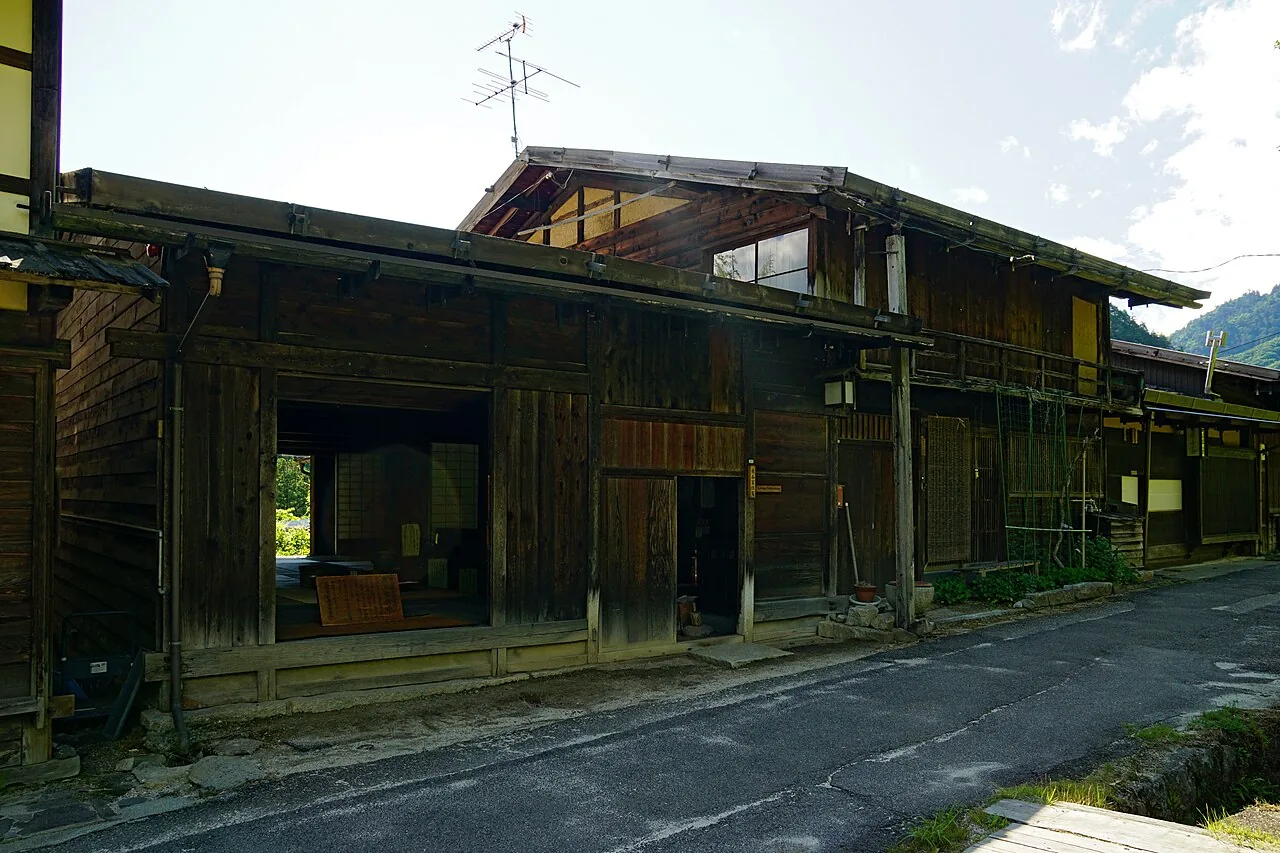

Picture a year here instead of a week: the old road over the pass in every season, and the wooden post towns strung along the same railway line. If you can see yourself here, read on.
In Nakatsugawa, the city that includes Magome, the akiya bank had houses asking a few million yen, or tens of thousands of dollars, in October 2026, posted in Japanese. The Akiya Letter will send new houses from towns like this one in English, with a link to the town's own page.
I’m preparing guides to akiya — Japan’s empty houses — in the Kiso Valley: how akiya banks work, what an old house costs in its first year and what to check before the first winter. If you’d like to live here one day, join the waiting list.
Official pagesNakatsugawa City: akiya bank (Magome) ↗ · Nagiso Town: akiya bank (Tsumago) ↗ · Shiojiri City: moving here (Narai) ↗
Sources
- Magome – Tsumago walking course — Tsumago Tourist Association
- Luggage forwarding service 2026 — Tsumago Tourist Association
- Access to Tsumago — Tsumago Tourist Association
- Places to stay in Tsumago — Tsumago Tourist Association
- Tsumago-juku — Nagano Prefecture Tourism Association
- Narai-juku and the Torii Pass — Nagano Prefecture Tourism Association
- Narai-juku inns (ryokan) — Narai-juku Tourism Association
- Narai-juku inns (minshuku) — Narai-juku Tourism Association
- Magome-juku — Gifu Prefecture Tourism Association
- Ochiai stone paving — Gifu Prefecture Tourism Association
- Magome-juku and the Toson Memorial Museum — Nakatsugawa City
- Places to stay in Magome — Magome Tourist Association
- Tsumago's preservation and residents' charter — Tsumago Tourist Association
- Trekking routes: Torii Pass — Nagano Prefecture Tourism Association
- Narai-juku FAQ: luggage storage — Narai-juku Tourism Association
- Chuo Line timetable from Nagoya (March 2026) — JR Central
- Chuo Line timetable at Nagiso (March 2026) — JR Central
- Chuo Line timetable at Kiso-Fukushima (March 2026) — JR Central
- Chuo Line timetable at Narai (March 2026) — JR Central
- Chuo Line timetable at Yabuhara (March 2026) — JR Central
- Shinkansen from Kyoto to Nagoya — JR Central Tours
- Nagiso akiya bank — Nagiso Town
- Nagiso town buses and demand taxi — Nagiso Town
- Climate normals for Nagiso (1991–2020) — Japan Meteorological Agency
- Moving to Shiojiri — Shiojiri City
- Nakatsugawa akiya bank — Nakatsugawa City
- Bear warning for the Kiso region (June 26, 2026) — Nagano Prefecture
- Black bear caution — Nakatsugawa City