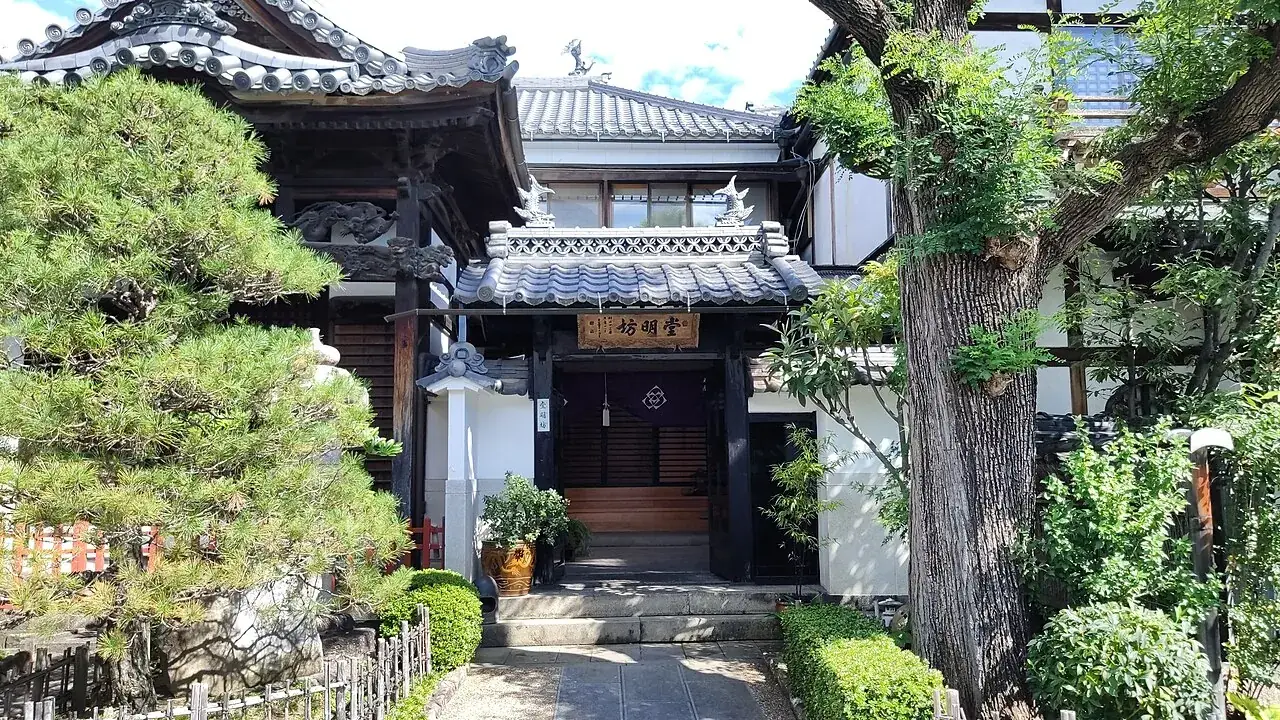
Doumyou-bou, a temple lodging at Zenkoji. Photo: Drivephotographer / Wikimedia Commons / CC0

- Without a car, sleep near Nagano Station or in a Zenkoji temple lodging for the city, and take the train or bus out to an onsen town for a ryokan night.
- Yudanaka is 44–45 minutes from Nagano by limited express, and Shibu is a further 5–10 minutes by bus or taxi; Nozawa Onsen is 11 minutes by Shinkansen to Iiyama and about 25 minutes by bus.
- Since June 1, 2026, Nagano Prefecture charges a lodging tax of ¥200 per person per night (¥300 after the first three years) on stays from ¥6,000 per person per night, room only.
One night by Nagano Station, then a ryokan night in an onsen town on the train line.
Every route in this guide begins at Nagano Station.
Shibu, Yudanaka and Nozawa are onsen towns you can reach by train and bus.
- 1Shibu or YudanakaRyokan and public baths, by the snow monkeys
- 2Zenkoji temple lodgingThe temple's morning service, in the city
- 3Nozawa Onsen13 public baths, Shinkansen and bus
Where should you stay in Nagano without a car? Near Nagano Station, or in one of the temple lodgings at Zenkoji, if you are here for the city: the Shinkansen, the Nagano Electric Railway and the buses all start at the station. For a ryokan with hot-spring baths, ride on to an onsen town. Yudanaka, by the snow monkeys, is 44–45 minutes away by limited express, and Shibu is a further 5–10 minutes by bus or taxi from Yudanaka Station; Nozawa Onsen is 11 minutes by Shinkansen to Iiyama and about 25 minutes by bus from there.
Below are the places to stay in Nagano Prefecture that you can reach by train and bus, and the prefecture's new lodging tax. For what to see in the city, see my Nagano guide.
Where to stay in Nagano: areas compared
| Area | Good for | From Nagano Station |
|---|---|---|
| Near Nagano Station | Early trains, day trips | On foot |
| Zenkoji temple lodgings | The morning service | Bus about 15 min |
| Shibu and Yudanaka | Onsen ryokan, snow monkeys | Train 44–45 min to Yudanaka; bus or taxi to Shibu |
| Nozawa Onsen | Public baths, skiing | Shinkansen and bus |
| Matsumoto | The castle | Train 50–56 min |
| Hakuba | Skiing, mountain walks | Bus 1 hr 10 min or more |
Notes on the table:
- Zenkoji: the bus to Zenkoji-Daimon leaves from stand 1 at the Zenkoji exit and costs ¥190; then about 5 minutes on foot.
- Shibu and Yudanaka: the limited express on the Nagano Electric Railway; the local train takes about 1 hour 15 minutes.
- Nozawa Onsen: 11 minutes on a Hakutaka Shinkansen to Iiyama, then about 25 minutes on the Nozawa Onsen Liner bus.
- Matsumoto: the limited express Shinano, from the November 2026 timetable.
- Hakuba: Alpico gives 1 hour 10 minutes to 2 hours 5 minutes for the express bus, depending on the stop.
Near Nagano Station
A hotel near the station is the simplest base for a first night, or for a trip built on day trips. The Hakuba bus and the trains to Yudanaka and Iiyama leave from here.
If you go out to an onsen town for one night, you can leave your big bags at the station:
- Zenkoji exit, 1st floor: 230 coin lockers.
- East exit, 2nd floor: 189 coin lockers.
- Prices: ¥400, ¥600 or ¥700 by size; open 24 hours.
Yudanaka Station's luggage service has been suspended since January 12, 2023, so do not count on leaving bags there.
Temple lodgings at Zenkoji
Zenkoji has 39 temple lodgings (shukubo). They are meant for people who come to worship at the temple, and they guide you to the morning service in the main hall.
- Who can book: 2 people or more; groups are 7 or more. Solo travelers are asked to get in touch.
- Price: the standard weekday rate starts at ¥13,200 per person for a night with dinner and breakfast, for 2 adults or more. Prices change on weekends, holidays and in busy periods, and the lodging tax is extra.
- Room only or breakfast only: ask when you book.
- How to book: by phone to the Zenkoji shukubo association, +81 26-237-7676, 9:00–16:30 every day (to 14:00 on December 31). There is no English booking page.
- Getting there: the bus from Nagano Station to Zenkoji-Daimon takes about 15 minutes and costs ¥190; the main hall is about 5 minutes on foot from the stop.
Onsen ryokan by the snow monkeys: Shibu and Yudanaka
Yudanaka is 44–45 minutes from Nagano by limited express, about 1 hour 15 minutes by local train. The fare is ¥1,660 plus a ¥100 limited express charge. Shibu Onsen is a short ride from Yudanaka Station: about 5 minutes by taxi from Yudanaka Station, or about 7 minutes on a bus bound for Kanbayashi, getting off at Shibu Onsen Iriguchi or Shibu Onsen Wagobashi. These times do not include waiting for the bus.
If you stay in Shibu:
- The nine public baths: only people staying in Shibu Onsen can use all nine. Your inn lends you a key, the baths are free, and they are open 6:00–22:00, except during cleaning.
- What to bring: the public baths have no showers, shampoo or body soap. The ryokan association suggests changing into your inn's yukata.
- Staying in Yudanaka instead: a room in Yudanaka does not give you the key to Shibu's baths.
For anyone:
- Shibu Odayu: the only one of the nine that takes day visitors, 10:00–17:00, ¥800 for adults and ¥500 for children, with occasional closures. To get in, buy a ticket at the Shibu Onsen tourist information center or one of the inns near Odayu that sell them, then show it at one of the designated shops or inns, which unlock the bath for you. The ryokan association notes that these places are sometimes unattended, depending on the time; see its day-visit page.
- Yudanaka: Kaede-no-Yu, the hot-spring bath at Yudanaka Station, is open 10:00–21:00 (last entry 20:30) and closed on the first Tuesday of each month (the next day if that is a holiday).
- The snow monkeys: from Yudanaka Station, take the bus to the Snow Monkey Park stop, then walk about 35 minutes to the monkey park, on an unpaved path with steps and slopes.
For the monkeys, see my snow monkeys guide; for the baths, see Nagano onsen without a car.
Nozawa Onsen
Nozawa Onsen has 13 public baths, looked after by local residents' groups. Anyone visiting the village can use them; there is a box for a small donation, and you wash before getting into the bath.
- Getting there: a Hakutaka Shinkansen from Nagano to Iiyama (11 minutes), then the Nozawa Onsen Liner bus (about 25 minutes, ¥600).
- Booking: the tourism association's list of places to stay marks inns that take bookings online. You can also ask the tourism association to book for you.
- Bus times: the Liner timetable published as of October 25, 2026 runs to November 30, 2026, with the last bus from Iiyama at 21:20; some buses do not meet the Shinkansen. Winter times were not yet published then.
- Tax: Nozawa Onsen has its own lodging tax (see below).
Matsumoto and Hakuba
Both are in Nagano Prefecture and both work without a car, but they are separate trips from Nagano city:
- Matsumoto: 50–56 minutes from Nagano on the limited express Shinano. See my Matsumoto guide.
- Hakuba: the express bus from Nagano. See where to stay in Hakuba without a car.
Both have their own lodging tax as well.
What a ryokan stay includes
JNTO, Japan's national tourism organization, describes a ryokan stay like this:
- A tatami room with futon bedding.
- A yukata robe.
- Dinner and breakfast: typically a multi-course kaiseki dinner and a Japanese breakfast.
- Shoes off indoors.
- Most ryokan have a hot-spring bath.
Check what your plan includes before you book. For smaller family-run inns, see minshuku vs ryokan.
Nagano's lodging tax
Nagano Prefecture has charged a lodging tax since June 1, 2026.
| Room price per person per night | Tax per person per night |
|---|---|
| Under ¥6,000 | None |
| ¥6,000 and over | ¥200 (¥300 after the first three years) |
- Which price: the room only, before tax.
- Who is exempt: stays that are part of kindergarten, school or university activities, events run by nurseries and similar facilities or by free schools, and junior high school club activities run by local clubs, certified by the head of the school, facility or group. The page lists no exemption for tourists or by age.
- Five municipalities add their own tax: Matsumoto, Karuizawa, Achi, Hakuba and Nozawa Onsen. There, the prefecture's share is ¥100 (¥150 after the first three years) and the municipality's own tax is added to it.
- Nagano city, Shibu and Yudanaka: Nagano city and Yamanouchi, the town that Shibu and Yudanaka belong to, are not on that list.
- How much each of the five municipalities adds, and whether the ¥6,000 line applies there: the prefecture's page does not say
- The Shinkansen fare from Nagano to Iiyama
- The Nozawa Onsen Liner's winter timetable
- How many ryokan there are in Shibu and in Yudanaka
- Whether solo travelers can usually get a temple lodging at Zenkoji
- The Nagano Electric Railway's winter timetable
How I checked this
- Took the lodging tax from Nagano Prefecture's tax page and the temple lodgings from Zenkoji's own pages (October 25, 2026).
- Took Shibu's public bath rules from the Shibu Onsen Ryokan Association, and the bus and taxi times from the Nagano Prefecture Tourism Association.
- Took train times and fares from JR East and the Nagano Electric Railway, and the ryokan basics from JNTO. Left out ryokan room prices, which change by plan and date.
Getting to Nagano from Tokyo or Osaka
Hokuriku Shinkansen to Nagano: about 1 hour 30 minutes.
Shinkansen to Nagoya, then the limited express Shinano: about 3 hours from Nagoya.
Frequently asked questions
Where should I stay in Nagano without a car?
Near Nagano Station for the city and day trips, since the Shinkansen, the Nagano Electric Railway and the buses all start there. For a ryokan with hot-spring baths, stay a night in Yudanaka, 44–45 minutes away by limited express, or in Shibu, a short bus or taxi ride beyond Yudanaka Station.
Can I stay at a temple in Nagano?
Yes. Zenkoji has 39 temple lodgings (shukubo) for people who come to worship. They take bookings for 2 people or more, and ask solo travelers to get in touch. The standard weekday rate starts at ¥13,200 per person with dinner and breakfast.
Can I use the public baths in Shibu Onsen without staying there?
Only one of the nine: Shibu Odayu. Buy a bath ticket first, then show it at one of the designated shops or inns, which unlock the bath for you. The other eight are for people staying in Shibu Onsen, who borrow a key from their inn and bathe for free between 6:00 and 22:00.
Is there a lodging tax in Nagano?
Yes, since June 1, 2026: ¥200 per person per night for the first three years, then ¥300. Stays under ¥6,000 per person per night (room only, before tax) are not taxed. Matsumoto, Karuizawa, Achi, Hakuba and Nozawa Onsen add their own tax on top of a smaller prefectural share.
Keep planning
Sources
- Lodging tax — Nagano Prefecture
- Temple lodgings (shukubo) — Zenkoji
- Access — Zenkoji
- Coin lockers at Nagano Station — JR East
- Fares (from December 1, 2025) — Nagano Electric Railway
- Timetable (spring 2026) — Nagano Electric Railway
- Yudanaka Station — Nagano Electric Railway
- The public baths — Shibu Onsen Ryokan Association
- Day visits to the baths — Shibu Onsen Ryokan Association
- Around Shibu Onsen — Nagano Prefecture Tourism Association
- Kaede-no-Yu — Yamanouchi Town
- Access — Jigokudani Monkey Park
- Hot springs — Nozawa Onsen Tourism Association
- Places to stay — Nozawa Onsen Tourism Association
- Access — Nozawa Onsen Tourism Association
- Hokuriku Shinkansen timetable (November 2026) — JR East
- Limited express Shinano timetable (November 2026) — JR East
- Nagano–Hakuba express bus — Alpico
- Japanese ryokan — JNTO